
Over the past six months I have received so many messages asking about dissolving hyaluronic acid, and I have dissolved many different kinds of it, so I decided to write this article.
First, if your filler goes wrong, it is best to return to the original clinic to have it dissolved. Honestly, no doctor wants to clean up after someone else. Dissolving is thankless work, and patients who need it are usually not in a good mood. After a few difficult patients made a scene with me over dissolving, I suddenly understood why other clinics don't take dissolving cases XD
The people who most need hyaluronic acid dissolved are usually those with tear-trough "caterpillars" or a filler nose bridge that has turned into a Na'vi nose. Before doing a nose thread lift, or topping up the tear trough with new filler, I always dissolve the old filler first so that new filler or threads can be placed.
Most people are terrified when they hear "dissolving." So what is hyaluronidase? In fact, the human body already has hyaluronidase, so the body's natural hyaluronic acid is broken down by the enzyme it produces itself as we age.
Hyaluronidase is quite natural: it is extracted from sperm heads, and it won't make you hollower.
The short answer: hyaluronidase is recommended in six situations — tear-trough filler caterpillars, a filler nose bridge that has become wide, nasolabial fold filler that has migrated, a chin filler that is too pointy, a bumpy forehead from filler, and a full face of overfilled or migrated filler that needs a full-face reset.
In the market, some clinics charge for dissolving by the cc of filler dissolved and some by area. The cost usually falls between NT$5,000 and NT$15,000, depending on the dose needed.
| Item | Key point |
|---|---|
| Cost | About NT$5,000–8,000 per area |
| How long it acts | Almost no effect after 24 hours |
| When new filler can be added | Official advice is about 48 hours later |
| Bruising | Almost always bruises for more than a week, so leave time |
| Best timing | Within two months of a filler failure; the later, the harder to dissolve |
The principle of hyaluronidase: when a sperm tries to break into an egg, it secretes a hyaluronidase-like substance to get in. So medical hyaluronidase is extracted from bovine and ovine testes. Because it is hard to make, a thumb-sized vial of hyaluronidase is actually very expensive.
Most clinics don't want to take on dissolving patients for no reason, which also makes information about hyaluronidase harder for the public to find. Usually, if the original clinic is unwilling to handle it, dermatology and aesthetic centers at large hospitals such as National Taiwan University Hospital and Chang Gung can help with dissolving.
When should you have hyaluronidase injected?
1. Tear-trough filler caterpillars
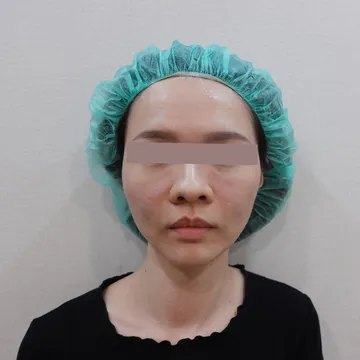
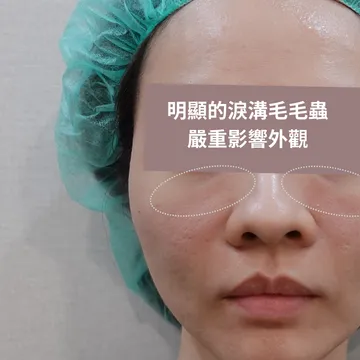
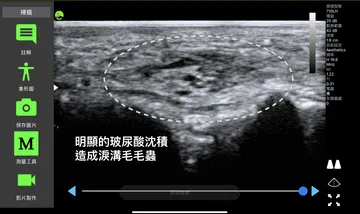
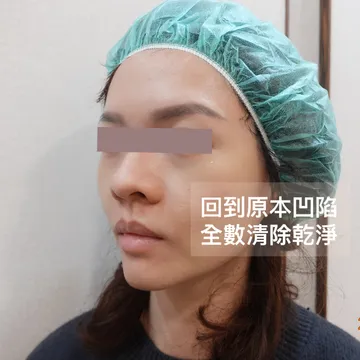
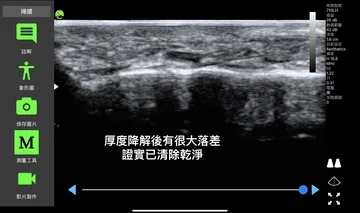
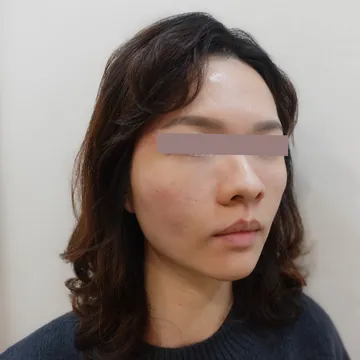
A tear-trough caterpillar that is not dissolved will almost never disappear through the body's own metabolism. Because it was placed in the wrong layer, it metabolizes extremely slowly, and I have seen many that were still there after more than five years. If you have a caterpillar, the best solution is to dissolve it directly.
2. A filler nose bridge that has become wide
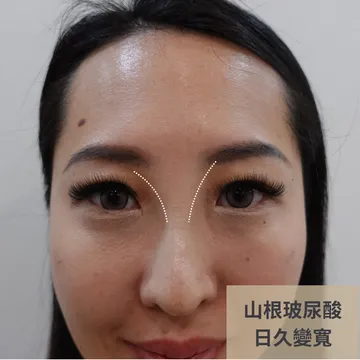
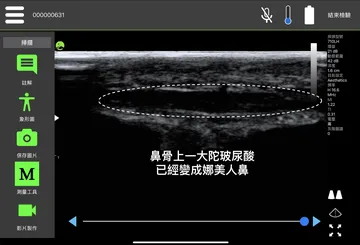
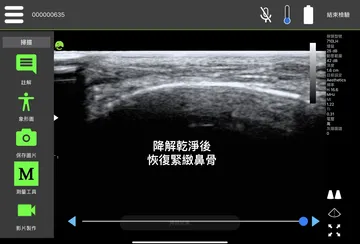
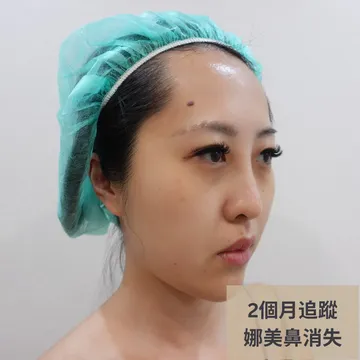
If a filler nose bridge has become wide, you must dissolve it first before adding new filler, otherwise the more you inject, the wider it may get.
I remember one patient clearly. She wanted a nose bridge top-up, and her last nose bridge filler was almost ten years earlier. I thought nothing would be left, but when the blunt needle went in it felt like a cue stick pushing a billiard ball. I saw with my own eyes a lump of unknown material pushed to the top of the nose bridge, and I had to pull the needle out quickly and first dissolve that lump of filler residue from more than ten years ago.


3. Nasolabial fold filler that has migrated
The nasolabial fold is a hot spot for filler migration, because the mouth talks and eats every day and the muscles keep squeezing. If the original injection was too shallow or the filler too soft, the filler is slowly pushed to the sides of the fold and becomes two raised ridges, as if your smile were wearing parentheses.
Migrated filler will not return by itself. I recommend dissolving it first and then re-injecting at the correct layer. For the full causes and treatment of migration, monkey-face look and puffiness in nasolabial fold filler, see: What to do when nasolabial fold filler fails?
4. A chin filler that is too pointy
Too much chin filler can create a "witch chin": too pointy, too upturned or even crooked. Some people have filler that slides downward with muscle movement, making the chin long and blunt.
The chin is an area where hyaluronidase works very well. Dissolving the old filler, returning to your original chin and re-sculpting is far more worthwhile than forcing a top-up on a wrong foundation. For a full evaluation of whether to dissolve, see: Regret your chin filler? Should you have hyaluronidase injected in the chin?
5. A bumpy forehead from filler
The forehead is a large area. If filler is not spread evenly, you get patchy bumps, or the so-called "memory foam effect": dents appear on the surface, rebound very slowly, and the forehead looks pitted under light.
A bumpy forehead usually requires dissolving the uneven filler across the whole area first, returning the forehead to its original plane, and then considering re-filling. For a full analysis of the four kinds of forehead filler complications, see: What to do when forehead filler fails?
6. Overfilled or migrated filler across the face → you need a full-face dissolve and reset!
Filler migration most often happens because the injection layer was wrong, and it appears most often in the nasolabial folds and chin.
If filler has migrated, don't worry too much: a little hyaluronidase injected into the migrated filler easily clears it.
Or if the filler you received was the wrong type, such as a small-molecule product in a large-molecule area, or too soft a product in an area that needs a firm one, I recommend dissolving the original filler first so that new filler doesn't end up bumpy.
Will hyaluronidase make me hollower?
First, after hyaluronidase you will almost certainly bruise for more than a week, because it dissolves some tiny blood vessels. Obvious bruising is basically unavoidable after dissolving, so if you care a lot about bruising, please set aside time to be bruised before you go.
Next is what everyone cares about most. I used to tell patients you will go back to how hollow you were before the filler, but I found that the patient's idea of "hollow" and mine are different, and most patients couldn't believe this was how they looked after dissolving. So now I tell everyone: afterward you will be hollow, hollow, definitely hollow, but that is just how you looked before the filler (otherwise you wouldn't have had tear-trough filler in the first place if you hadn't had a tear trough).
Although hyaluronidase does break down some of your body's own hyaluronic acid, your body keeps producing it. But unless you add new filler, you can never return to the you from before you had a tear trough, and since many caterpillars have been there for years, you are actually hollower than back then.
If you can't accept your original self after everything is dissolved, official advice is that new filler can be added after about 48 hours, because dissolving generally has almost no effect after 24 hours.
What are the side effects of dissolving hyaluronic acid?
1. Loose, bulging skin. Imagine a caterpillar like a fetus that has been under your skin all along. Dissolving is like suddenly delivering a baby after ten months of pregnancy: your belly doesn't instantly return to its pre-pregnancy tightness and needs time to slowly tighten back. So it is normal for the skin around the eyes to feel a little loose right after dissolving.
2. Sharp-needle dissolving that is incomplete and leaves bumps.
With the brute-force method, where any bump is poked with a sharp needle, besides being as painful as a trip through hell, it easily leaves filler undissolved and bumpy, and may even dissolve filler in other areas because the correct layer wasn't reached.
The best method is to use ultrasound first to see the layer of the filler, then use a blunt needle to go directly into the filler and dissolve it with a small dose.
It is very normal for one session not to clear everything, especially filler placed many years ago that has fused with tissue and is very hard to dissolve; some brands of filler are inherently hard to dissolve. Demanding that a doctor dissolve it all in one session is unreasonable. If a bump remains afterward, just dissolve again.
I recommend dealing with a failed filler within two months, because filler gradually fuses with the tissue, and the later you go, the harder it is to see exactly where the filler is.
What cannot be dissolved?
| Hyaluronic acid | Sculptra | AestheFill | Ellanse | Vivabella | Panda needle | Radiesse | Fat |
|---|---|---|---|---|---|---|---|
| O | X | X | X | Only the dissolvable hyaluronic acid part | X | X | X |
Don't worry too much if hyaluronic acid filler fails: at worst, hyaluronidase can still rescue you. But if you plan to get Sculptra, AestheFill or Ellanse, hyaluronidase cannot be used to fix them.
Of course, I admit these products last very long, but investing in aesthetics has gains and losses, so please read the public disclosure (the Ministry of Health and Welfare package insert) carefully.
When Should You Have Hyaluronidase? 7 Common Situations
Many patients agonize over whether to have hyaluronidase, feeling it is a pity to dissolve filler they paid a lot for. Most original clinics will tell you: "It's fine, hyaluronic acid breaks down naturally in a year."
Hyaluronic acid does get metabolized, but "it metabolizes" and "it disappears completely" are two completely different things.
Many people develop delayed allergic reactions to filler, and the longer they wait, the more likely hard filler nodules form, at which point even hyaluronidase may be of no help. In the following situations, I recommend steeling yourself and having hyaluronidase.
- Overfilled (puffy) face from filler or excess injection
- Swelling from an allergic reaction to filler; some people's filler swells and hurts during their period or when their immunity is low
- Tear-trough caterpillars: wrong injection layer, and the eye area metabolizes slowly, so it doesn't clear naturally
- A failed lip shape from lip filler
- Memory foam effect or bumpiness from forehead filler
- A chin filler that is too pointy
- Migrated nasolabial fold filler
How Fast Does Hyaluronidase Work? When Is It Hard to Dissolve in One Session?
After hyaluronidase, the filler can be eliminated right away, with results that are immediately visible.
Hyaluronidase starts working as soon as it is injected. Within the first 30 minutes, more than half is dissolved, and within the next few hours the filler in that area is almost completely dissolved.
Once dissolved, the filler becomes liquid, so the under-eye area may still look puffy. Allow about 3–4 days for it to be fully metabolized and reach the post-dissolving state. If you want to re-inject filler after dissolving, I recommend waiting 48 hours.
Some people are done in one session, but a few need several sessions to clear completely, depending on whether the filler is intact.
If the filler was injected within the past year, it keeps its shape and has clear borders, so hyaluronidase can easily dissolve the whole lump.
The following situations are hard to dissolve in one session:
- The filler was mixed with a collagen stimulator (Ellanse, Sculptra, Radiesse): hyaluronidase can only dissolve the hyaluronic acid part, and the failed collagen stimulator part remains
- The filler was placed more than 5 years ago and has spread with muscle movement, scattered through the tissue
- Allergic reaction to filler has turned into hard nodules in the tissue
- Repeated overinjection has overfilled the face, and a single session can hardly dissolve it all
The 3 Most Common Myths About Hyaluronidase
Now that the principle is covered, here are the three things I am asked most in clinic. I answer these three questions almost every week, and patients usually look nervous when they ask.
Myth 1: Will I end up hollower after hyaluronidase?
Let me give the answer first: No.
Some patients ask whether I can dissolve only 30% or 50%, because they are afraid of becoming hollow if everything is dissolved. I have to honestly say I can't: hyaluronidase spreads, and once injected, the filler in that area is basically dissolved completely.
If the hyaluronidase dose is too low and the filler isn't fully dissolved, bumpiness is actually more likely later, so I tell patients: if you want to keep your filler, keep all of it; if you don't want it, dissolve all of it.
Hyaluronidase won't make you hollower; at most it returns you to how you were before the filler.
It cannot take away tissue you originally had, so it can't make you hollower than you were. Steroids, on the other hand, easily make you hollower than before, which is why steroids should not be used casually.
Myth 2: Will hyaluronidase also dissolve my own hyaluronic acid?
The answer to this one is more interesting: "Yes, but it doesn't matter much."
Hyaluronidase doesn't recognize its owner. It can't tell which hyaluronic acid was injected from outside and which is your own; it dissolves all of it.
So when I inject hyaluronidase into the tear trough, it dissolves not only the caterpillar but also your own hyaluronic acid.
But because your own hyaluronic acid makes up a very small share, dissolving it makes no significant difference to your appearance.
For example, after tear-trough filler, your own hyaluronic acid is probably less than one percent. Even if we say it is one percent, the other ninety-nine percent is all from outside. So after hyaluronidase, what you actually lose is that one percent.
And that one percent comes back: your own tissue replenishes it in about three to four days, with almost no difference in appearance. So don't let the loss of this bit of your own hyaluronic acid stop you from dealing with failed filler.
Myth 3: Will I look worse after hyaluronidase?
I'll be a bit blunt on this one. It may be hard to hear, but I think it's better for you if I say it clearly.
Patients often ask me: "Dr. Ou, what if I look really ugly after dissolving? Is it hyaluronidase's fault?"
My answer: hyaluronidase only returns you to your original state. If you think you look worse after dissolving, I'm sorry, but you may not have seen your original self for a very long time.
Especially after dissolving tear-trough caterpillars, many people ask me why there is still a bulge under their eyes. That is your natural eye bag. If you had tear-trough filler 3–5 years ago, your face has kept aging in those years and the fat under your eyes keeps accumulating. Besides the original caterpillar, the eye bag has also been growing day by day, so when the bulge under your eyes becomes unbearable, in some ways it is because the eye bag has grown a lot.
If you find you have eye bags after dissolving, I recommend not going back to re-inject filler, but consulting about eye bag surgery to solve the problem at its root.
Likewise, many people feel their skin is loose after removing an overfilled look. After all, a large amount of filler is like your face being pregnant for years, and dissolving all that volume at once is like suddenly delivering the baby: the skin will sag. Afterward you can combine radiofrequency/ultrasound devices or thread lifts to restore skin firmness.
So please don't say "I look terrible and haggard after dissolving." Hyaluronidase didn't make you haggard; it just took away the cover-up and let you see the most original, real you.
Only after returning to your original state do you know what the next problem to really address is.
How Hyaluronidase Is Injected: 3 Types of Filler and Dissolving Methods
After all that background, we now come to the most practical part: how should filler actually be dissolved? Many people think dissolving is simple and you can just poke a few times, but different fillers need different approaches.
That is also why hyaluronidase is best done with ultrasound guidance: ultrasound imaging shows how the filler is distributed, allowing more precise injection.
Type 1: a single large lump
This type is the easiest to dissolve. It is usually filler injected not long ago, with clear borders.
Its position is obvious by touch: one or two lumps that you can feel yourself with a finger at home. You don't need to smile or make an expression; it is just there.
Under ultrasound, this lump is very obvious. The original doctor usually injected with a sharp needle, and you can tell at a glance that this one is especially large.
For this type, the approach is precise blasting: we go straight to the center of the filler with a sharp or blunt needle and inject hyaluronidase to blow it apart from the inside.
Usually, as soon as the dissolving "explosive" is delivered, you can feel the filler disappear right away, and many patients sit up afterward and find it already completely dissolved.
Type 2: scattered — the kind that has been topped up again and again
This is the one I find most troublesome, and most overfilled faces fall into this type. The patient has had top-ups many times over the years, sometimes filler and sometimes collagen stimulators, and under ultrasound it looks like a stew of everything.
Under ultrasound, the filler is spread across the whole picture, made of many small balls. Each is small, but together the amount is considerable.
The trouble is not the amount but the spread.
This type can't be dissolved with a sharp needle: there are so many filler particles that hundreds of pokes would bruise the whole face and still not finish.
So the approach is completely different. We use a blunt needle through a single entry point, and once at that layer we inject hyaluronidase over a wide area, using a higher concentration so that it acts across the whole region rather than point to point. It is like dropping an atomic bomb to wipe out the filler in the area.
This method can clear scattered filler, but the downside is that one session may not remove all of it. If you feel one session isn't enough, a second session can be done.
Type 3: not hyaluronic acid at all — Ellanse that has become "fake bone"
This is the most frustrating one: hyaluronidase can only dissolve hyaluronic acid, and every other material is beyond saving!
Patients usually come in discouraged, because they can feel that lump every day and have felt it for a long time. They thought the filler simply hadn't dissolved and went to several clinics for hyaluronidase with no response at all.
The reason is simple: it isn't hyaluronic acid at all.
If it is a collagen stimulator such as Ellanse, Sculptra or Radiesse, the texture is extremely hard, hard to the degree of bone. Even worse, it is sometimes placed in mid-air: a whole bone-like mass grows in a place where there shouldn't be bone. You can think of it as a piece of fake new bone.
This is very obvious under ultrasound. Ellanse itself is not black; it is a very special kind of white. But if you see the whole lump as completely black, the reason isn't that it looks black like hyaluronic acid, but that the ultrasound simply cannot pass through it.
The ultrasound bounces straight back off that hardness, nothing underneath can be scanned, there is no signal, so it shows as solid black.
In this case, injecting hyaluronidase has no effect. Hyaluronidase only recognizes hyaluronic acid.
Can it be treated? It's hard to treat, but not impossible.
Collagen stimulators are currently removed mainly by surgical scraping, and for injections only a low dose of steroid can be used, with a sharp needle and in tiny amounts. It cannot work as instantly as hyaluronidase, so be mentally prepared. Usually about two weeks after an injection the lump gets a little smaller; the next month a second injection makes it a little smaller again.
Some patients need six or seven, even ten or more sessions before the lump shrinks noticeably.
This is a process that takes patience, and I can't promise how many sessions it will take.
Comparison of the three types
| Type 1: single large lump | Type 2: scattered | Type 3: Ellanse fake bone | |
|---|---|---|---|
| Feels like | One or two obvious hard lumps in a fixed spot | A whole area, can't tell how many | Hard like bone |
| Under ultrasound | Black area with clear borders | Scattered small balls, like drifting smoke | Entire block black because ultrasound can't pass through |
| Main cause | Concentrated dose in a single injection | Topped up again and again, accumulated over time | What was injected wasn't hyaluronic acid |
| Treatment | Precise blasting with a sharp needle | Wide-area infusion with a blunt needle | Steroids; hyaluronidase is ineffective |
| How fast it works | Half dissolved in 30 minutes, fully in 48 hours | Noticeably dissolved within hours | Shrinks a little each time, needs multiple sessions |
| Approximate sessions | Usually one | Usually one to two | Six or seven, even ten or more |
Does Hyaluronidase Hurt?
People who ask this have usually already decided to go ahead and are just preparing mentally. Let me explain what really happens.
Near the tear trough there is a blood vessel called the infraorbital artery. Running beside this artery is another structure: the infraorbital nerve.
This nerve can hardly be seen on ultrasound because it is truly very thin.
But you can feel it. If a blunt needle goes in and scrapes without anesthesia, hitting this nerve is extremely painful, painful enough to make your whole face jump. This is not an exaggeration; you really do jerk.
So my approach is to do a nerve block before starting.
We first inject a small amount of anesthetic near that nerve. Once it takes effect, the whole mid-face area goes numb. Only then does the blunt needle slowly go in, and during the process I add a little very dilute anesthetic.
In my own practice I prefer a painless formula for the anesthetic, so that the anesthetic injection itself doesn't become another torture.
Why Do I Keep Saying to Deal With It Early?
This is the part of the article I most want you to see.
As mentioned, filler doesn't disappear on its own. More precisely: not only does it not disappear, it becomes harder and harder to deal with over time.
There are two reasons.
The first is spreading. After filler stays in tissue for a long time, it slowly fuses with the surrounding tissue, and a once-concentrated lump becomes more and more scattered. Once it scatters, the area hyaluronidase has to act on gets bigger, its concentration is diluted, and efficiency naturally drops.
The second is encapsulation. Your body treats it as a foreign object, and the tissue secretes connective tissue that slowly weaves a capsule around it. Places like the tear trough, where caterpillars form, are especially prone to being squeezed by nearby muscles again and again, so the capsule gets thicker, and what is inside gets harder and denser.
Once this capsule forms, hyaluronidase has a hard time reaching the filler inside.
This difference is very clear under ultrasound. Filler injected a month and a half ago I can scan clearly, with transparent borders, and I can tell exactly where it is and how much there is. But filler placed over ten years ago looks like drifting smoke on the screen: you know it is there, but you can't say where its boundary is.
I want to clarify one thing: filler placed ten or twenty years ago is not undissolvable. It is just less defined and less clean-cut than recently placed filler, and requires much more hyaluronidase. At my most extreme, I once injected more than ten vials of hyaluronidase in a single day.
So if you are hesitating right now, my advice is simple: dealing with it one year earlier versus five years later are two completely different levels of difficulty. The cost differs too, since the dose and number of sessions needed both increase.
What patients who waited more than ten years finally tell me is almost always the same: "I wish I had come earlier."
Frequently Asked Questions (FAQ)
What is hyaluronidase?
The human body already has hyaluronidase, and natural hyaluronic acid is broken down by the body's own hyaluronidase as we age. Medical hyaluronidase is extracted from bovine and ovine testes, and because it is hard to make, its unit price is high.
How much does hyaluronidase cost per area?
Typical market prices range from about NT$3,000 to 5,000. If the original clinic is unwilling to handle it, dermatology and aesthetic centers at large hospitals such as National Taiwan University Hospital and Chang Gung can also help with dissolving.
Will hyaluronidase make me hollower?
You go back to how hollow you were before the filler — that was your original face. And since many caterpillars have been there for years, you are actually hollower than back then, so please be prepared.
How long after dissolving can I get new filler?
Official advice is about 48 hours, since dissolving has almost no effect after 24 hours.
What are the side effects of hyaluronidase?
You will almost always have obvious bruising for more than a week; the skin around the eyes may feel temporarily loose right after dissolving; filler placed many years ago may not clear in one session, and if a bump remains you can dissolve again. The best approach is to locate the filler with ultrasound first and dissolve it with a blunt needle in small doses.
Which fillers cannot be dissolved?
Hyaluronidase only works on hyaluronic acid; Sculptra, AestheFill and Ellanse cannot be dissolved (the panda needle cannot be dissolved but fades quickly on its own).
How fast does hyaluronidase work?
Hyaluronidase starts working as soon as it is injected. Within the first 30 minutes more than half is dissolved, and within the next few hours it is almost completely dissolved. Dissolved filler turns liquid and takes about 3–4 days to be fully metabolized.
Does hyaluronidase also dissolve my own hyaluronic acid?
Yes, but it doesn't matter much. Hyaluronidase doesn't recognize its owner and dissolves your own hyaluronic acid too, but your own share is very small, and your own tissue replenishes it in about three to four days, with almost no difference in appearance.
Does hyaluronidase hurt?
My approach is to do a nerve block first: I inject a small amount of anesthetic so the whole mid-face area goes numb, then the blunt needle slowly goes in, and I add some very dilute anesthetic during the process, so the anesthetic itself doesn't become a torture.