
"Dr. Ou, I want a higher nasal bridge but I'm afraid of surgery. Can I get hyaluronic acid filler in the nasal root?" Back when nose thread lifts were not yet common, nasal-root filler was the only non-surgical way to reshape the nose. But what exactly are the drawbacks of hyaluronic acid nose augmentation, and how should you choose between it and a thread-lift nose job?
Hyaluronic acid nose augmentation has 3 main drawbacks: first, the nasal root widens after several years (the most common problem, and no brand, whether Juvederm, Vivacy or V50, can completely avoid it); second, vascular occlusion that can even cause blindness (the most dangerous); third, cross-linker allergy that causes hard lumps. This is why most patients at my clinic who want a non-surgical nose job now rarely choose hyaluronic acid, and most choose a thread-lift nose job (nose threads) instead.
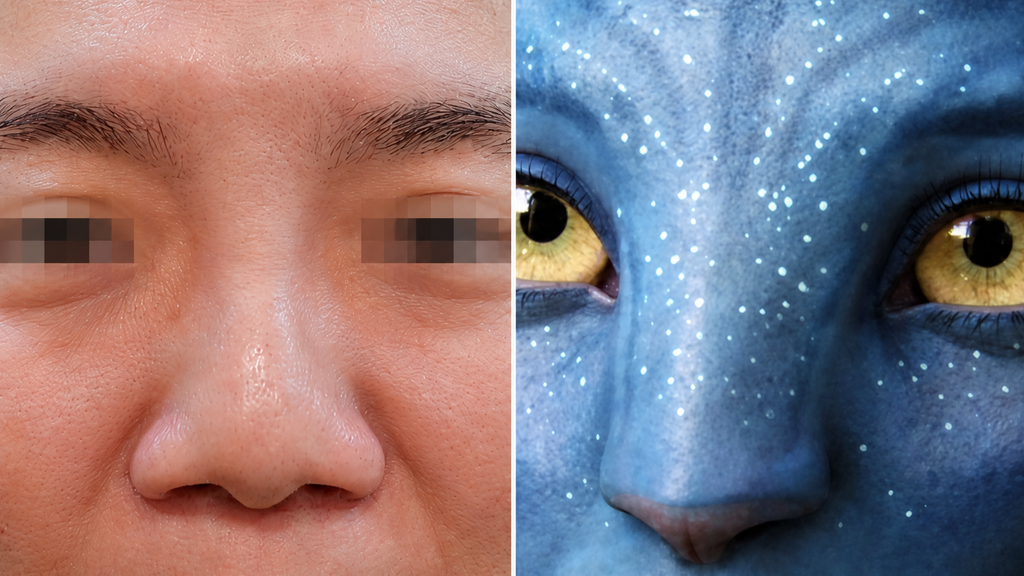
In this article I draw on my daily, first-hand experience of dissolving nasal-root filler to share a comparison of the 3 major nose-shaping methods, the drawbacks of 5 kinds of nasal-root filler, the complications of hyaluronic acid nose augmentation, and how to fix a widened nasal root, to help you choose the treatment that suits you best.
Quick summary: drawbacks of hyaluronic acid nose augmentation
| Most common drawback | The nasal root widens after several years: once the filler blends with tissue and turns liquid, it flows to both sides of the nostrils |
|---|---|
| Most dangerous complication | Vascular occlusion and blindness: the nasal root has many arteries, so even with a blunt cannula and ultrasound, a 0% risk cannot be guaranteed |
| Other side effects | Cross-linker allergy: a hard lump at the nasal root that swells up when you are ill or run down |
| How each brand performs | Juvederm Volux and Vivacy (gel type) still widen after several years; V50 (particle type) is least likely to widen but fades fast |
| Other nasal-root fillers | Radiesse and Ellanse: cannot be dissolved, so failures are very hard to fix |
| What to do if the nasal root widens | Dissolve the filler with hyaluronidase first, then re-inject. Do not simply add more (a second round is bound to widen it) |
| If you insist on filler | Keep a single session to 1 cc or less, do not top up repeatedly, and never let a beginner practice on you |
| Safer alternatives | Thread-lift nose job (does not widen); for a major change of nose shape, rhinoplasty surgery |
1. Three ways to reshape the nose: filler, thread lift or surgery. Which is better?
In one sentence: if you want to change the shape of the nose substantially (tip, nostrils, columella), rhinoplasty surgery is the best answer. If you only want to fine-tune the height of the nasal root, filler gives an obvious short-term result but tends to widen after several years, while a thread-lift nose job raises the height less but looks natural and never widens.
| Method | Pros | Cons | Best for |
|---|---|---|---|
| Rhinoplasty surgery | Lasts the longest; can also refine the tip, nostrils and columella | Irreversible and with a higher risk of failure: implant displacement, capsular contracture, and costly revisions | People who want a complete nose makeover and have a clear nose in mind |
| Hyaluronic acid filler | Lower price, shortest recovery, dissolvable (reversible) | Tends to widen after several years; the highest occlusion risk of any injection site | People who want to try a higher bridge first and accept dissolving and redoing it later |
| Thread-lift nose job (nose threads) | Natural and attractive; will not widen later | Raises the nasal root less than filler | People who want to avoid surgery and also avoid the widening problem |
On Dcard and PTT, whenever rhinoplasty comes up, the non-surgical camp and the surgery camp start arguing: one side supports filler, another supports nose threads, and a third recommends surgery for any nose reshaping. Every opinion has a valid point, because there is no 100-point method in aesthetic medicine. What matters most is whether the method suits you.
For those who dare not undergo rhinoplasty, using filler or nose threads to fine-tune the height of the nasal root means you do not pay the price of irreversible surgery, and you do not need a long recovery. Below I list the pros and cons of the three methods for your reference.
1. Rhinoplasty surgery: the only answer for a major reshaping, but with the highest risk and cost
Most Asian noses are relatively flat, so non-surgical nose shaping has real limits. Changing the shape of the nasal tip or narrowing the nostrils, for example, is very hard to do without surgery.
Besides lasting a long time, surgery can refine different parts of the nose, including the tip, nostrils and columella. Quite a few patients send me a photo of a Korean celebrity's nose and say they want nose threads to look like that. I tell them to go straight for surgery! If you want to remake your whole nose and have a template in mind, forget about nose threads or nasal-root filler; only surgery can give you a completely new look.
Of course, everything has a downside. To enjoy the benefits of a brand-new nose, you must accept a higher risk of failure. Implant displacement, implant contracture after many years, and revisions because the shape is not as expected are all common complications of rhinoplasty. Before surgery, assess carefully whether you are ready emotionally and financially, because both the surgery and any revision are expensive.
2. Hyaluronic acid filler: cheap and reversible, but its nature means it will widen
The biggest advantage of hyaluronic acid nose augmentation is that it gives you a higher bridge at a much lower price than surgery and with the shortest recovery. If you do not like it, you can simply dissolve it, and that reversibility is a huge plus.
The filler is injected into the "deep fat" under the nasal muscle layer, close to the bone, building something like an implant to raise the nasal root. To get an implant-like, bony effect you must choose a firm, large-particle hyaluronic acid such as Juvederm Volux, Vivacy or V50. But even with such firm products, the first year looks great, and then as the filler blends with tissue it cannot stay as hard as an implant or keep the same shape. Once it blends in and turns liquid, it eventually flows toward both sides of the nostrils and the nasal root becomes wider.
I also offered nasal-root filler when I first opened my clinic. So why, even though very firm fillers are available, does my clinic no longer perform hyaluronic acid nose augmentation at all? Mainly because I am one of the few doctors who dissolve hyaluronic acid, and I dissolve so much nasal-root filler every day. I have dissolved every brand, whether Juvederm, Vivacy, V50 or V18. These products are only relatively suitable for the nasal root, and they still widen after many years.
This means hyaluronic acid nose augmentation has a honeymoon period: it looks great right after injection, but even with a highly skilled doctor the nature of the product cannot be changed. Many people regret it years later and come to me for hyaluronidase to treat a widened nasal root.
3. Thread-lift nose job: raises less, but looks natural and does not widen
A thread-lift nose job (nose threads) works on basically the same principle as filler, except that absorbable threads are placed at the nasal root instead of hyaluronic acid to fine-tune its height.
Its drawback is that the added height is less obvious than with filler, because threads have a very small volume and cannot add as much bulk as liquid filler. Its biggest advantage is that it looks natural and attractive, and you will never face the widening problem later.
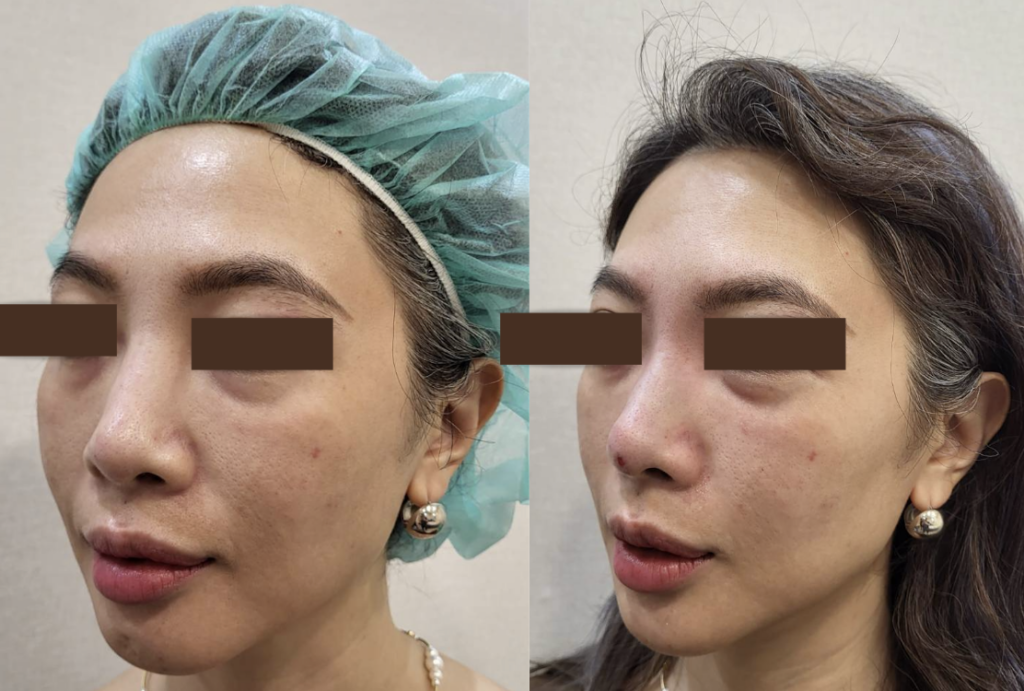
In the photo below, my patient has beautiful eyes, lips and other features, but a nasal root that widened after filler years ago troubled her. After dissolving it and switching to nose threads, the dimension of her whole face improved greatly. This is why I rarely inject nasal-root filler now.
2. Drawbacks of hyaluronic acid nose augmentation: an analysis of 5 common fillers
No filler avoids nasal-root problems perfectly: gel-type hyaluronic acids such as Juvederm and Vivacy widen after several years; particle-type V50 is least likely to widen but fades fast; Radiesse and Ellanse are less likely to widen, but because they cannot be dissolved, failures are the hardest to treat.
1. Juvederm and Restylane drawbacks: gel-type filler flows to the sides as it is metabolized
Restylane, Teosyal, Belotero and Juvederm are all typical gel-type hyaluronic acids. Even with the firmest formulation, such as Juvederm Volux in the nasal root, the first few months look bony and attractive, but as the filler slowly blends with tissue, that bony look gradually disappears.
As gel-type filler is metabolized, the gel easily migrates to both sides of the nasal root, widening it. People often want it dissolved two or three years after injection, so I strongly advise against using gel-type filler in the nasal root.
2. V50 drawbacks: least likely to widen, but fades very quickly
V50 hyaluronic acid is the brand least likely to widen in the nasal root. Since V50 arrived in Taiwan, Taiwan finally has an "extra-firm" filler that effectively solves nasal-root widening and the lack of support.
But as a particle-type filler it lacks the volume of a gel (gel-type filler keeps its volume thanks to the gel), so it disappears faster. After V50 is injected into the nose, more than half of the volume is usually gone within six months, and repeated top-ups bring back the widening problem.
Still, based on my experience with nearly every brand of the firmest filler on the market, V50 is currently the best answer for the nasal root. Apart from its shorter duration, it has the fewest side effects afterwards.
3. Vivacy drawbacks: firm enough, but still a gel type
As a top-tier extra-firm filler from a European brand, its firmness is about as suitable for the nasal root as filler gets. But it shares Juvederm's problem: it is a gel-type filler, and after many years of blending with tissue it will still widen. I prefer to recommend this brand for chin filler.
4. Radiesse nose (regenerative injection) drawbacks: it cannot be dissolved, and there is no going back once injected
The biggest advantage of Radiesse over hyaluronic acid is that it is firm and does not deform easily, so the nasal root rarely widens after injection. Many clinics love using it in the nose, but I have refused to inject Radiesse into the nasal root throughout my career, mainly because it cannot be dissolved.
The space available for injection at the nasal root is also narrow, so once Radiesse has been injected, it is very difficult to inject any other filler afterwards.
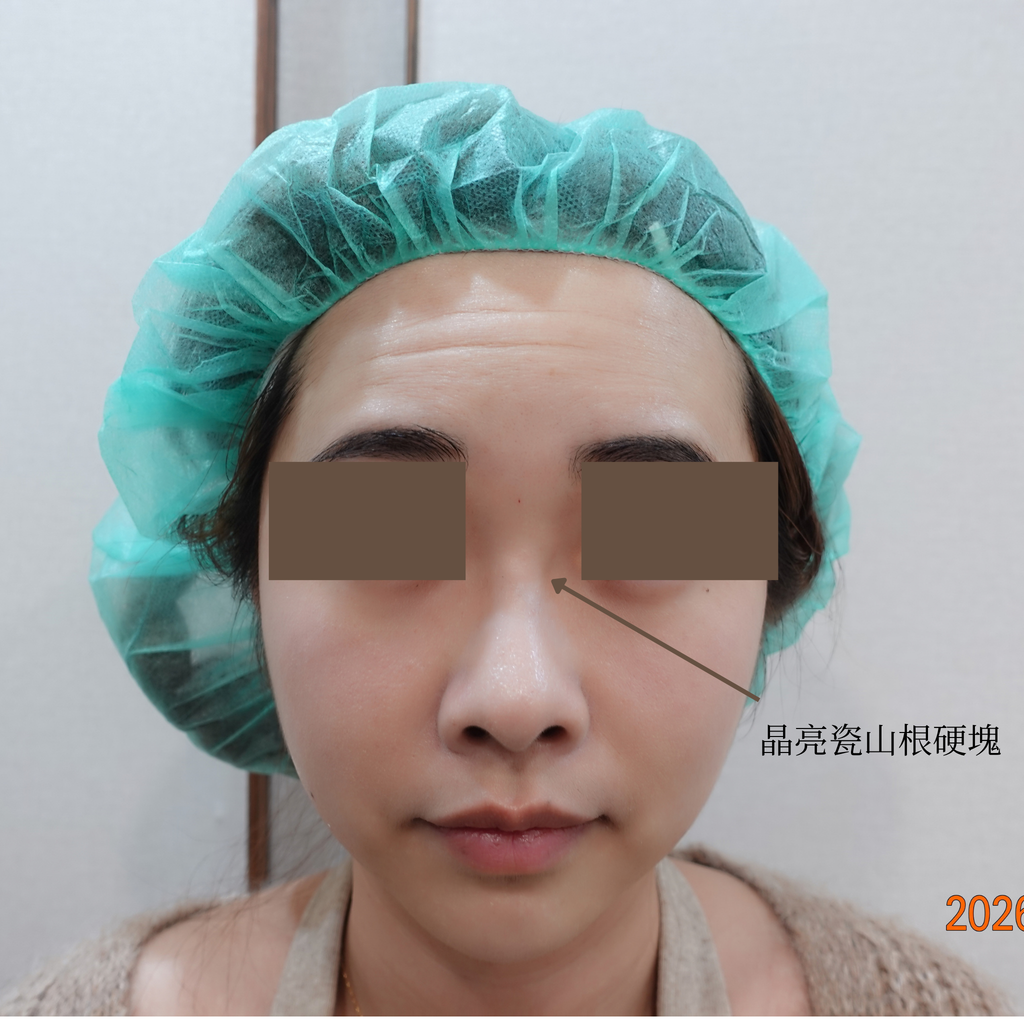
The case below is a patient who came to me to dissolve her nasal-root filler. The ultrasound showed it did not look like hyaluronic acid. She had been injected with calcium hydroxylapatite (Radiesse's former name), not a hyaluronic acid skin booster. The collagen that grew after the injection formed a round ball that was visible from outside but could not be dissolved and could only be removed surgically.
I want to stress that Radiesse and Ellanse are both good products, but neither is suited to a shallow area like the nose that needs fine sculpting. If the collagen grows even slightly in the wrong place, the consequences are very troublesome. This is why I never use any collagen stimulator in the nasal root.
Further reading: Where is Radiesse suitable?
5. Ellanse nose drawbacks: uncontrolled growth and cannot be dissolved, the one I recommend least
Of all fillers, Ellanse in the nasal root is the one I can accept least. Especially 5 to 10 years ago, when Ellanse had just become popular, a lot of clinics pushed Ellanse noses, and I have seen many patients nearly break down after one.
Like Radiesse, Ellanse cannot be dissolved. It is firm and does not deform easily, and in large hollow areas such as the temples and forehead it can give excellent support. But in a space as narrow as the nasal root, even if it grows well it becomes a wide, hard nasal root. Most surgeons are unwilling to debride it, and if it fails or the shape is unsatisfactory, it lasts for a very, very long time.
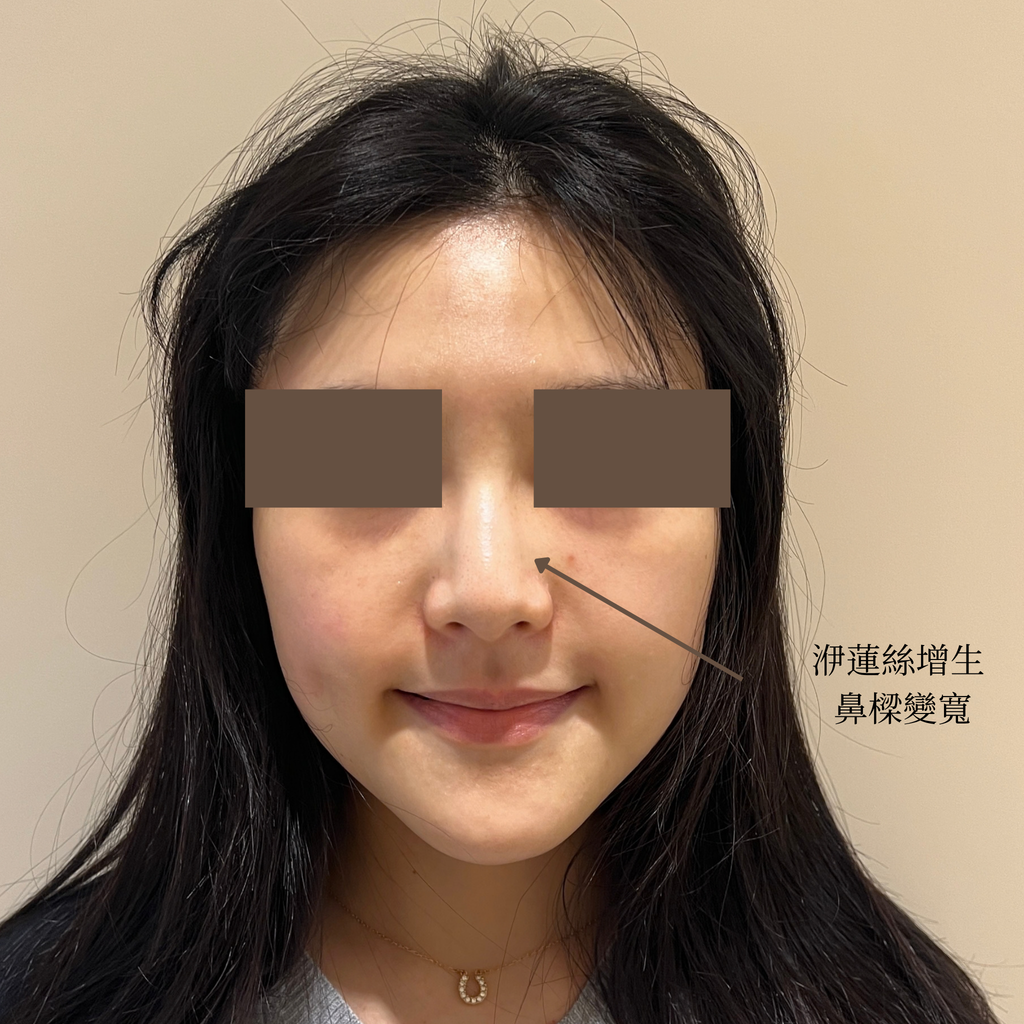
The patient in the photo below had Ellanse in her nose many years ago, in the nasal root and also the bridge. Hard collagen grew along the entire bridge, and she regrets it because the bridge now looks thick. This is exactly what I keep emphasizing: the nose needs fine precision, and even a little too much collagen destroys the delicate look.
Further reading: Where is Ellanse suitable?
3. Complications and side effects of hyaluronic acid nose augmentation
Besides its high chance of widening, the most fatal complication of hyaluronic acid nose augmentation is vascular occlusion leading to blindness; next are the hard lumps and repeated swelling caused by cross-linker allergy.
1. Vascular occlusion: the most dangerous of all injection sites
Nearly every year there are tragic cases of blindness after nasal filler. Many people think nose threads sound frightening, but in fact the psychological pressure is greatest for doctors injecting nasal filler. Even though I use only blunt cannulas, I still cannot guarantee a 0% chance of occlusion. For the tear trough I can use ultrasound to locate vessels and avoid them, but in the nasal root even ultrasound makes it very hard to avoid, because there are too many important arteries there (further reading: The chance of blindness from filler and 3 lines of defense).
If you truly insist on nasal filler, please never let a beginner practice on you. Nasal filler looks easy but is the most dangerous of all sites. This year in my doctor friends' group chat I saw photos from a clinic where a patient's face was damaged. The side effects of fillers are definitely many more than those of thread lifts.
2. Cross-linker allergy: a lump at the nasal root, and swelling when you are ill
Everyone may be somewhat allergic to the cross-linker in hyaluronic acid. Many allergic patients who come to me to dissolve it can feel a hard lump at the nasal root, and the whole area swells when they are ill or run down. If this happens, I advise dissolving it with hyaluronidase as soon as possible. The longer you wait, the more the tissue becomes fibrotic, and even dissolving becomes very difficult.
4. What to do when the nasal root widens after hyaluronic acid filler
The direct answer: if the nasal root is already showing signs of widening, dissolve the filler with hyaluronidase first and then re-inject. Do not simply top up, because a second round of nasal-root filler will make it wider 99% of the time. If you really want hyaluronic acid nose augmentation, keep a single session to 1 cc or less and do not fill repeatedly.
Why can't you just top up? Newly injected filler acts like a billiard ball and pushes the old filler sideways, so the more you add, the wider the nasal root becomes. If it already shows signs of widening, it is best to dissolve it first and then re-inject (further reading: Hyaluronidase for a widened nasal root).
Frequently asked questions
Why does the nasal root widen years after hyaluronic acid nose augmentation?
Even with the firmest large-particle filler, as it blends with tissue and turns liquid it eventually flows toward both sides of the nostrils and widens the nasal root. Even with a highly skilled doctor, the nature of the product cannot be changed.
What is the most dangerous complication of hyaluronic acid nose augmentation?
Vascular occlusion leading to blindness. The nasal root has too many important arteries, and even with a blunt cannula and ultrasound it is very hard to avoid. Cases of blindness after nasal filler happen almost every year, so never let a beginner practice on you.
Is a hard lump in the nasal root, or swelling when I am ill, an allergy?
Everyone may be somewhat allergic to the cross-linker in hyaluronic acid. A common sign is a hard lump at the nasal root and swelling of the whole area when you are ill or run down. If this happens, I advise dissolving it as soon as possible; the longer you wait, the more fibrotic the tissue becomes and the harder even dissolving gets.
Can a failed hyaluronic acid nose job be fixed?
Yes. The biggest advantage of hyaluronic acid nose augmentation is that it can be dissolved. Thanks to that reversibility, if the nasal root widens or you do not like the result, you can dissolve the filler with hyaluronidase and re-inject.
How do I choose between filler and a thread-lift nose job?
Threads raise the nasal root less than filler, but look natural and will not widen in the long run. Filler is cheaper, has a short recovery and is reversible, but tends to widen after many years. Thread lifts suit people who have decided against surgery and also do not want filler.
When do you recommend going straight to rhinoplasty surgery?
If you want to remake your whole nose, refining the tip, nostrils and columella, and have a template in mind that non-surgical methods cannot achieve, only surgery can give you a completely new look, but you must be able to accept a higher risk of failure and higher cost.
Conclusion
Hyaluronic acid nose augmentation gives a higher bridge at a lower price with the shortest recovery, and it remains reversible because it can be dissolved, so it will always have its supporters. But widening and occlusion are inherent to the product, and even the best doctor cannot change them.
A thread-lift nose job suits people who have decided against rhinoplasty and also do not want filler; if you want a complete nose makeover, assess rhinoplasty surgery directly. In the end, to each their own, and it depends on which camp you belong to!
Want to know which non-surgical nose shaping suits you? Consult Dr. Ou at Golden Apple now!
Online consultation
Written and updated by Dr. Ou Chia-Hung (founder and director of Golden Apple Aesthetic Clinic) | Last updated: September 4, 2026. This article is health education information and does not replace an individual diagnosis or treatment advice.
Not sure whether a widened nasal root can be saved? Add us on LINE and send one front photo and one side photo for Dr. Ou's preliminary assessment: @goldiapple (remember to include the @)