Table of Contents
Table of Contents
- What is a nose thread lift? The disadvantages of nose thread lifts have long been stigmatized (1) Residual threads (2) Threads piercing through (3) Cannot change the nose shape dramatically
- Roughly how many threads does a nose thread lift need?
- How much does a nose thread lift cost
- Recommended nose thread materials (1) Mint Lift nose threads (2) Miracle Thread / Metela
- Comparing three rhinoplasty methods: filler vs. thread lift vs. surgical rhinoplasty
- Nose thread lift complications
- Nose thread lift FAQ: How long until the swelling goes down? Does it hurt? Can I still have a nose thread lift if nasal root filler has made my nose wider? What if I regret it? How long does it last? Is it safe? Is the failure rate high? How to prevent threads from piercing through?
- The nose thread lift procedure (1) Key to a painless thread lift: anesthesia before the procedure (2) Nasal root and nasal bridge threads (3) Columella threads
- What to watch for after a nose thread lift
When I consult clients about minimally invasive nose work, most of those who dare not have surgery want to use nasal root filler. Many hear 'nose thread lift' (also called thread rhinoplasty) and 'reflexively say they don't want it', mainly because they have 'found too many failed cases' online. Many rhinoplasty surgeons strongly attack nose thread lifts, or friends around them had poor experiences, so the nose thread lift has long been like a rat crossing the street that everyone shouts at.
A fresh 2023 paper (Thread Lifting of the Nose: Fully Comprehensive Approach to the Technique, 2023) reports that thread rhinoplasty reached a striking 95% satisfaction rate at 6 months after the procedure. Since opening my practice I have done quite a few nose thread lifts and filler rhinoplasties, and all I can say is that nose thread lifts far outperform filler rhinoplasty in post-procedure satisfaction, refinement and side effects.
Of course I must admit that a nose thread lift can hardly last as long as surgical rhinoplasty or create a highly customized shape. So if you genuinely want to have rhinoplasty surgery one day, this article may not be for you, because having surgery after a nose thread lift usually means paying an extra fee to remove the threads. Please hold back, save up, and go straight to surgery!
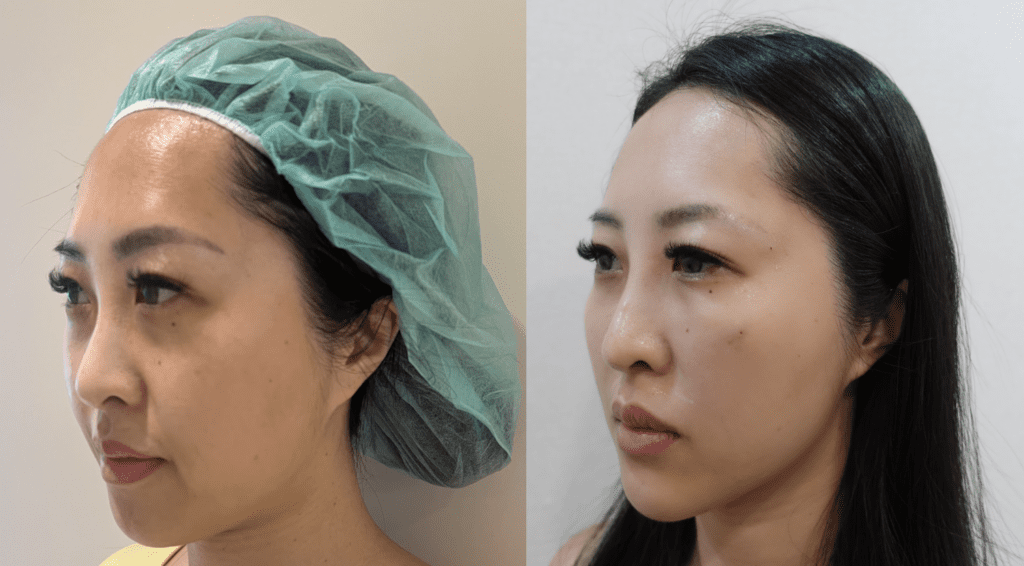
A nose thread lift suits people whose nose is already in good shape, whose nasal root is just a little short of 'star' quality. In the image below, my client's nose was already quite straight, and after the nose thread lift she gets approached by strangers when walking down the street. She is the typical person who doesn't want to take on surgical risk and only wants a slight adjustment, so a thread rhinoplasty suits her well. For clients who want to change the nose shape significantly, I suggest going straight to surgery, as what minimally invasive work can do is limited.
This article is mainly for people whose noses are naturally not bad, who don't want to take on rhinoplasty complications for the rest of their lives, and who simply want minimally invasive nose work. There are two main ways to do this: nasal root filler (filler rhinoplasty) and nose thread lift (thread rhinoplasty). In terms of aesthetics, the refinement of a nose thread lift far exceeds filler rhinoplasty.
What is a nose thread lift? The disadvantages of nose thread lifts have long been stigmatized
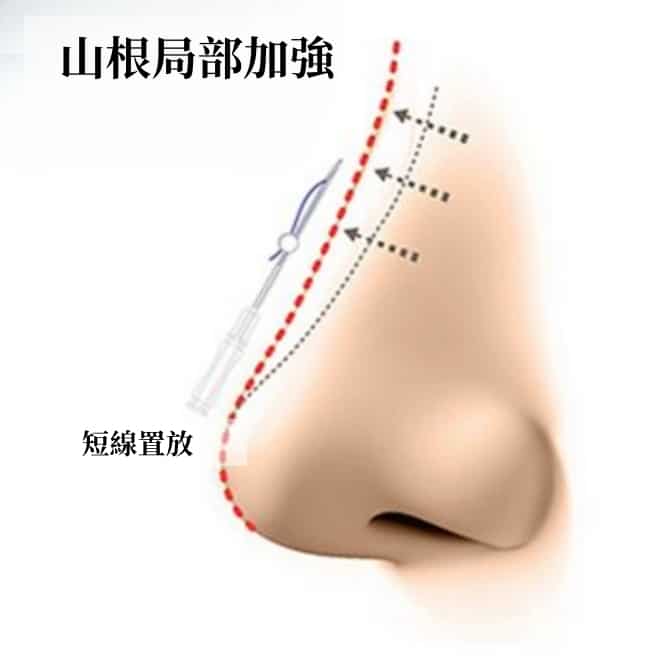
A nose thread lift is also often called nose thread sculpting or thread rhinoplasty. The principle is to place threads in the nasal bridge and columella to sculpt a taller nasal root and a more refined columella. Recovery is short, and compared with filler rhinoplasty it has one unassailable advantage: no risk of embolism and blindness. But because of the following myths, the nose thread lift has never been accepted by the market:
(1) Residual threads
On Dcard and PTT you often see people who had rhinoplasty after a nose thread lift and had a pile of threads removed, which the surgeon found infuriating. The biggest reason is: too many nose threads placed at once. Many cheap nose thread lifts on the market just cram in threads mindlessly, with some clients having 14-20 threads placed in one session. Of course some people think that is a good deal, but a nose thread lift is not an all-you-can-eat buffet where more is better value. Many clients tell me they don't want that fake 'influencer nose', which is usually the result of too many threads: the nasal bridge looks very unnatural, and threads wrapped in the middle are very hard to absorb, leading to residual thread problems. That is why you see many surgeons removing a dozen or twenty threads at once when clearing them, mainly because too many threads were placed in the first place.
(2) Threads piercing through
What most people fear most about a nose thread lift is threads piercing through. In fact, nose threads are like a bundle of chopsticks in the image below. Each thread has barbs that hook onto tissue, but when you place 10-20 at once, they are like the chopsticks in the center below: they don't lie against the nasal tissue, their hooks can't catch the tissue, and they are easily pushed out by external force (such as blowing or rubbing the nose), causing the threads to pierce through. So I must emphasize again that many people choose a nose thread lift out of greed for height, wanting it taller and more defined, and placing too many threads may greatly increase the risk of piercing through. The best approach is actually 6-8 threads at a time, and once the threads are absorbed the following year, do another nose thread lift and increase the height year by year.

(3) Cannot change the nose shape dramatically
Minimally invasive nose work does not carry the risks of surgery, but it is also more limited. A nose thread lift suits those whose natural nose is already 70-80 out of 100. The following nose types are not suited to a nose thread lift, and I suggest going straight to rhinoplasty surgery, as the effect of a nose thread lift on the nasal tip is limited:
- Those unhappy with the nasal tip, such as garlic-bulb, wax-apple or upturned noses
- Those with almost no nasal root
- Those who want to narrow the nostrils
In addition, because threads are very small in volume, if you have almost no nasal root, nasal root filler usually works better. After all, filler has much more volume than threads and is able to raise a flat nose.
Roughly how many threads does a nose thread lift need?
A nose thread lift is usually recommended with 6-8 threads. Beyond 8, some people notice their nose looks bluish. This is because the thread itself is blue, and if you pack the nasal root too full, a bruise-like blue appears.
So more nose threads is really not better. I recommend a gradual approach: place 6 threads the first time, and add more later if it is not defined enough. After all, removing too many threads is very difficult, while too few can be added to at any time.
For garlic-bulb noses, upturned noses or changing the nasal tip, I suggest seeking surgery directly. A minimally invasive nose thread lift can at most slightly improve the nasal root, and is better suited to people whose nose is already in decent shape and only want a fine adjustment.
How much does a nose thread lift cost
The short answer: one nose thread usually costs NT$3,000-5,000, the most appropriate number of threads is 6-8, and the price falls at NT$15,000-30,000. The nose thread lift fee at Golden Apple Aesthetic Clinic is NT$20,000, using Mint Lift threads. Be very careful with thread rhinoplasty under NT$10,000, which may use cheap, inferior non-absorbable threads.
Because nose thread lifts usually use short threads, one nose thread usually costs NT$3,000-5,000, and the most appropriate number of threads usually needs to be 6-8, with the price at NT$15,000-30,000. Be very careful with thread rhinoplasty under NT$10,000, which may use cheaper, inferior non-absorbable threads.
The nose thread lift fee at Golden Apple Aesthetic Clinic is NT$20,000, using Mint Lift threads.
Recommended nose thread materials
(1) Mint Lift nose threads
Among the threads currently approved by Taiwan's FDA, apart from bell threads, which are made of PLLA and absorb more slowly, the vast majority are absorbable PDO threads, which the body fully absorbs in about '3 to 6 months'. Mint Lift has the following advantages for a nose thread lift:
- One-piece construction: Mint is a top-tier Korean thread that uses patented molding technology to form the thread and barbs as one piece. It not only resists breaking, but its lifting force and tissue grip are also stronger than ordinary cut threads.
- Special sizes: there are special 6 cm / 3.8 cm short threads, very suitable for the front section of the nasal bridge, for lengthening the columella, or for a firm nasal tip.
- Fully absorbable: the thread is made of PDO, first used in surgery, with good biocompatibility and degradability, and can be fully absorbed by the body.
Mint Lift is the thread with the highest market share in Korea, with differently designed threads for every area from long to short. If you want to learn more about Mint Lift, see my article Introduction to Mint Lift threads. It has 6 cm and 3.8 cm short threads designed precisely for thread rhinoplasty and columella threads. This design lets the nose threads hook more firmly, and the thread length fits so well that no extra trimming is needed, greatly lowering the chance of threads piercing through.
The Blue Diamond fishbone thread comes in only one size, like buying a suit at ZARA: decent quality, but sorry, you can't choose the size. Mint Lift threads come in different lengths and thicknesses, like walking into a tailor shop where you can order a perfectly fitting suit, and the thread placement will then look refined and high-end.
When using Mint for thread rhinoplasty, we first use a total of 4 to 8 threads. Taking 6 threads as an example, I prepare two long 18-gauge (thickest) threads, two 19-gauge nose threads and two 19-gauge columella threads. Two are for the front section of the nasal bridge and two are for the columella.
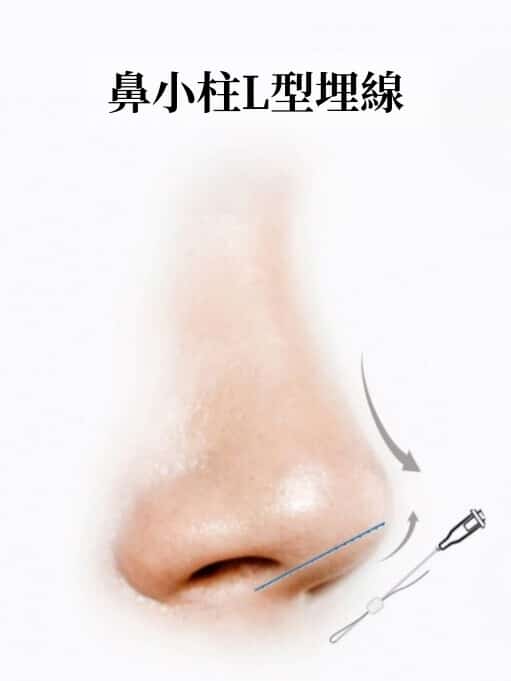
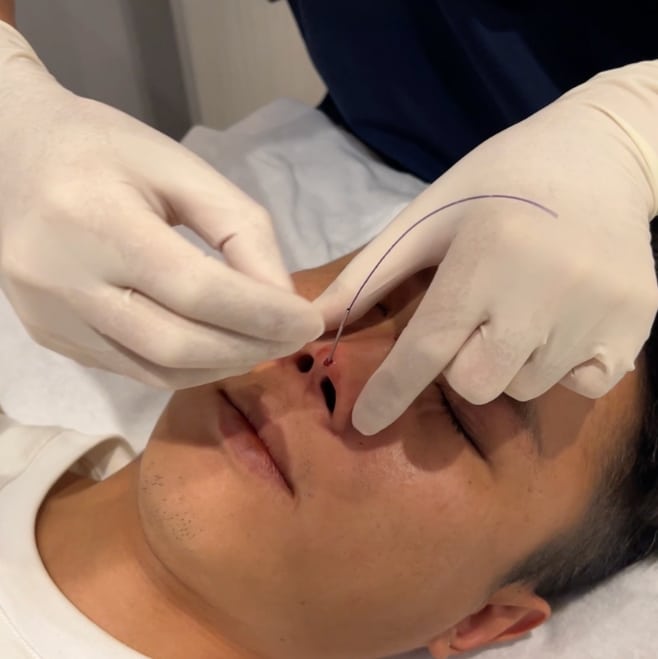
The long threads mainly build a complete framework from the nasal tip to the nasal root, just like building a house needs a main beam first. After that I place the 6 cm nose threads to reinforce the nasal root. Finally I use the 3.8 cm short threads, also inserted from the nasal tip and placed in the columella, which besides lengthening the columella also makes the nasal tip straighter and more delicate.
(2) Miracle Thread / Metela
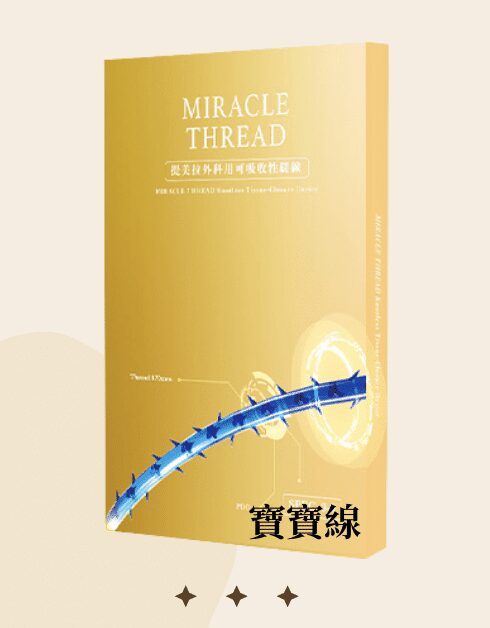
Miracle Thread plus Metela thread rhinoplasty is also a very suitable thread choice for a nose thread lift. Metela, the newest generation of thread, has high support and creates a defined, three-dimensional nasal root. Once the framework is done, I suggest pairing it with Miracle Thread baby threads. Baby threads are very thin and do not feel heavy, and can be placed in the nasal root to smooth out hollows, which is very suitable for those who only want a slight adjustment of the nasal root.
Comparing three rhinoplasty methods: filler vs. thread lift vs. surgical rhinoplasty
Basically, if a thread rhinoplasty doesn't look attractive afterwards, the biggest cause is usually too many threads. To keep things simple, some clinics just cram nose threads madly along the nasal bridge and do nothing to the columella, so the bridge looks bluish (because the thread is blue).
Rhinoplasty can basically be divided into three treatment methods: thread rhinoplasty, filler rhinoplasty and surgical rhinoplasty. Here is how they differ.
| Nose thread lift (thread rhinoplasty) | Filler rhinoplasty | Surgical rhinoplasty | |
|---|---|---|---|
| Appearance | More defined and bony; the nasal root looks narrower and more refined. | Feels slightly soft; looks gentler and natural. | Feels very hard and looks more artificial. The nose can be made very defined. |
| Pros | The nose shape is quite bony and natural, and the nose will not widen later; very quick procedure, short recovery; no embolism risk | Very quick procedure, short recovery; suitable for people who have never had rhinoplasty; suitable for those who only want a slight adjustment | One-time solution; better results for a severely flat nose; for special nose shape requirements |
| Cons | Cannot change the nose shape dramatically; if you want rhinoplasty later, there may be a thread removal fee | Risk of embolism; I suggest nasal root filler at most twice, and from the third time onward a nose thread lift, to avoid the filler widening the nose. | May cause nasal contracture, infection or a nose shape that is not as expected, requiring revision. |
| Longevity | About one year to one and a half years | About half a year to one year | Permanent |
| Recovery | About two to three days | About one to two days. If the dose is small, there is almost no recovery period. | About several weeks |
| Post-procedure side effects | Swelling is likely in the first one to two days and can be eased with anti-swelling and anti-inflammatory medication. | Right after the procedure the nose looks especially defined, and it takes two to three days for the shape to gradually become natural | Pain and a larger inflammatory response; a large bandage is needed, and you quietly get through the surgical recovery period |
| Cost | NT$15,000 - 30,000 | NT$10,000-20,000, depending on the filler brand; for the nasal root I only recommend V50 or Juvederm Volux | NT$200,000-400,000, depending on the surgeon's skill |
| Suitable for | Those who want to fine-tune the nasal root and nasal tip | Slight adjustment of the nasal root | Garlic-bulb or upturned noses, or noses needing major improvement |
Nose thread lift complications
Compared with filler rhinoplasty and surgical rhinoplasty, a nose thread lift has the fewest complications. I have still seen quite a few cases where filler rhinoplasty caused an allergic reaction and swelling, and someone who used Radiesse for rhinoplasty and ended up with a very hard lump (Radiesse and Ellanse are strongly not recommended for the nasal root, and the complications are beyond imagination).
The complications of surgical rhinoplasty are of course infection, or dissatisfaction with the nose shape requiring revision. As for nose thread lift threads, I have honestly never met anyone who was allergic to them (the probability is extremely low), so in comparison it is a choice whose complications are relatively controllable.
Nose thread lift FAQ
How long until the swelling goes down after a nose thread lift?
Right after the nose thread lift, because of the anesthetic, the nasal root looks wider or higher than normal, and the height drops considerably once the anesthetic wears off. So to reach the expected height, the nose will definitely look especially defined on the day of the procedure, and it will look most natural after about a week.
Does a nose thread lift hurt?
The process actually does not hurt, and the swelling does not last long.
Many people, after hearing about a friend's painful experience with thread rhinoplasty, shy away from it and choose filler rhinoplasty, which 'seems much less painful and swollen'.
But in fact, if thread rhinoplasty is performed properly, it should be 'just as painless and just as free of swelling' as filler rhinoplasty!
Can I still have a nose thread lift if nasal root filler has made my nose wider?
Yes. Most of my nose thread lift clients first come to have the widened filler dissolved and then have the thread rhinoplasty on the same day.
The biggest drawback of choosing filler for minimally invasive nose work is a widened nasal root. Once it has widened, I strongly advise against adding more filler, as it will only get wider and wider. I suggest dissolving it directly and then either going for surgery or choosing a nose thread lift.
What if I regret my nose thread lift?
If you regret nasal root filler, it can easily be dissolved. If you regret a nose thread lift, for example if the nasal root is too high or you don't like yourself with a nasal root, you can return to the clinic as soon as possible within one month to have the nose threads removed with forceps, and you can also return to your original appearance.
How long does a nose thread lift last?
A nose thread lift usually lasts 1 to 1.5 years. If you want a more defined height in between, threads can be added again after half a year.
Is a nose thread lift safe? Is the failure rate high?
Many people mistakenly think filler rhinoplasty is safer than a nose thread lift. Posts about failed nose thread lifts keep appearing on Dcard like a monthly routine, and surgeon-camp doctors complain about nose thread lifts all day (no wonder: if I were a surgeon who had to clear out all the nose threads before rhinoplasty, I would be furious too), so let me restate that this article is for people who are not considering surgery at all.
So nose thread lifts have been blackened in everyone's mind, but compared with filler rhinoplasty they are actually much safer, as nose thread lift threads carry no risk of embolism.
How to prevent nose thread lift threads from piercing through?
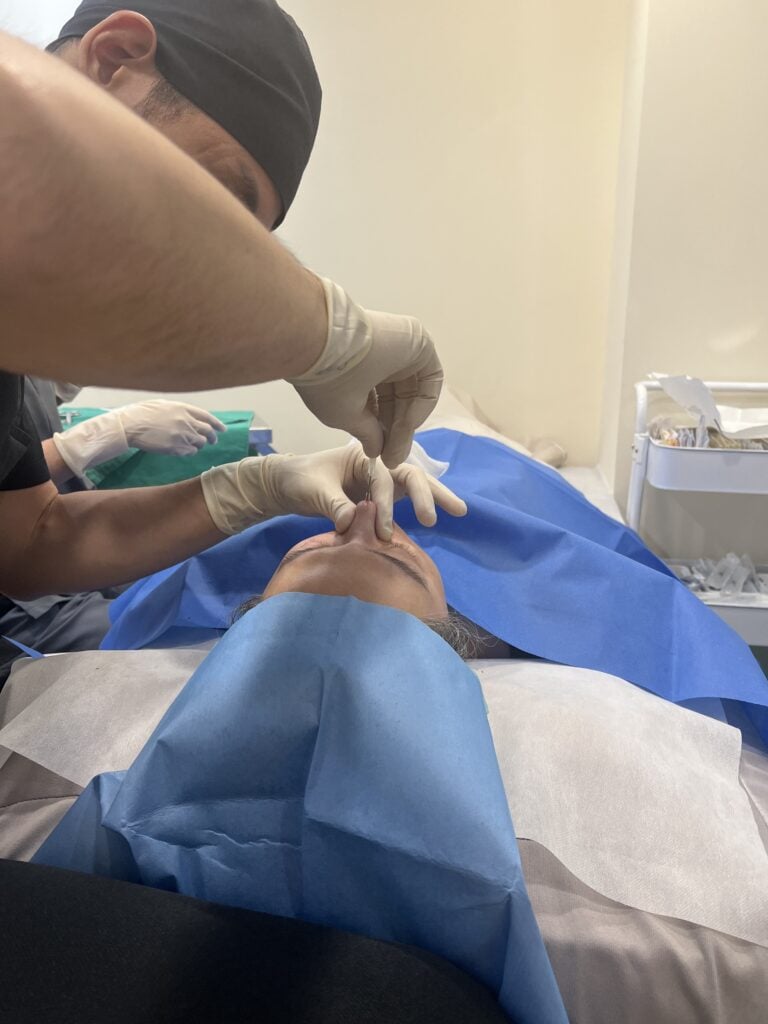
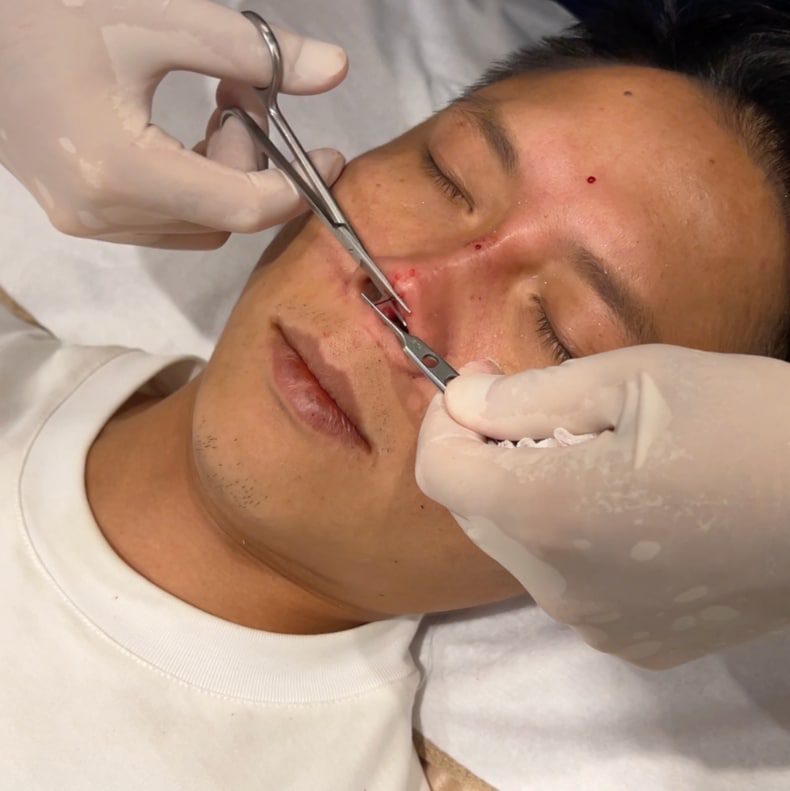
Whether the thread enters from the nasal tip or the glabella, the thread must be cut properly to prevent thread ends from piercing through after the nose thread lift. The picture shows cutting the thread at the nasal tip after completing the nasal bridge thread rhinoplasty.
The nose thread lift procedure
(1) Key to a painless thread rhinoplasty: anesthesia before the procedure
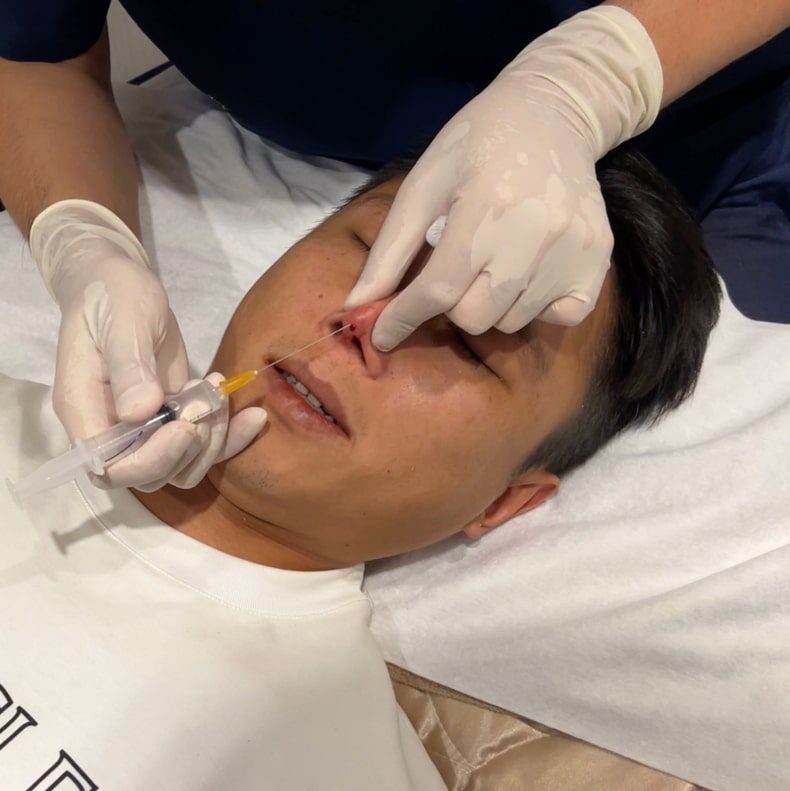
The nose is a relatively sensitive area, so one must be highly skilled with the concentration, ratio and dose of the anesthetic. The anesthetic must be injected gently and in a sufficient dose. If the anesthetic is sufficient and even, there is almost no discomfort during the nose thread lift.
(2) Nasal root and nasal bridge threads
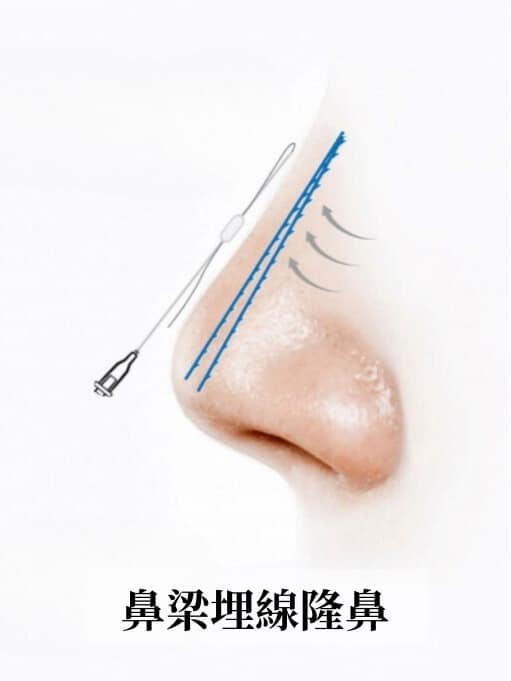
For the nasal bridge, the straight in-and-out method or the folding method can be used, placing a total of 4 to 6 nose threads along the bridge, which can achieve a good rhinoplasty and nose-lifting effect.
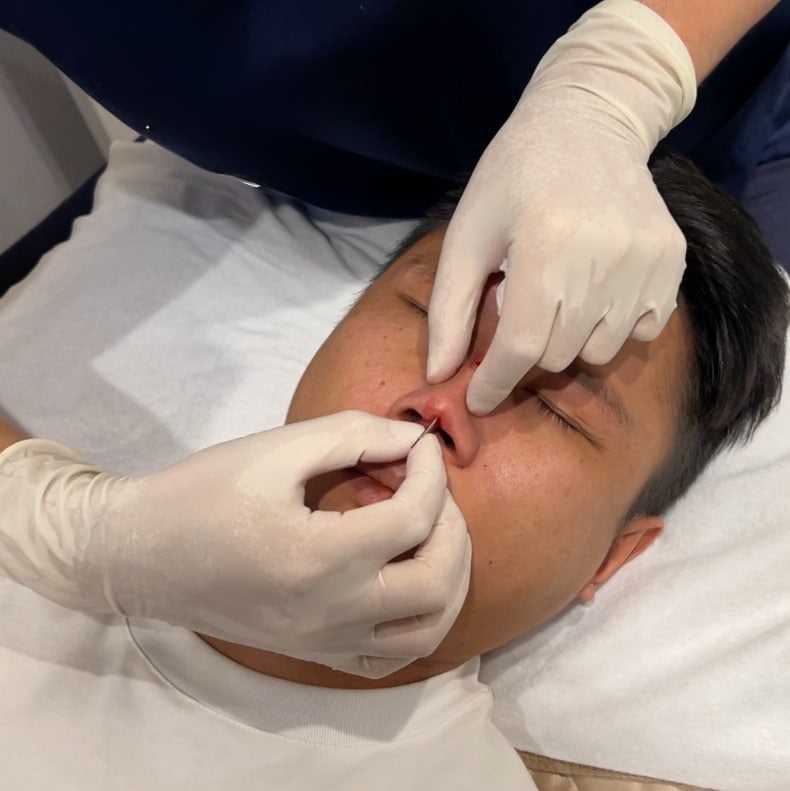
(3) Columella threads
What to watch for after a nose thread lift
The most important thing after a nose thread lift is to prevent infection. In the first week, avoid behaviors that make wounds prone to infection, such as smoking. The nose thread wounds may take two to three weeks to heal, so never pick at the wound or tear off the scab for no reason. If a nose thread seems about to pierce through, it is best to notify the original clinic as soon as possible to deal with it and avoid infection.
In summary, the surgery camp and the minimally invasive camp have always argued endlessly over rhinoplasty. The nose is the facial feature Asians care about most, and everyone hopes to end up with a better-looking nose whether they choose a nose thread lift, filler rhinoplasty or surgical rhinoplasty. Each method has its own advantages and risks to bear, and it is like asking whether renting or buying a home is better: there is no right or wrong.
I hope this article helps you understand the pros and cons of minimally invasive nose work and make the choice you can bear and that suits you best.