
What Is EPTQ Honeycomb Hyaluronic Acid?
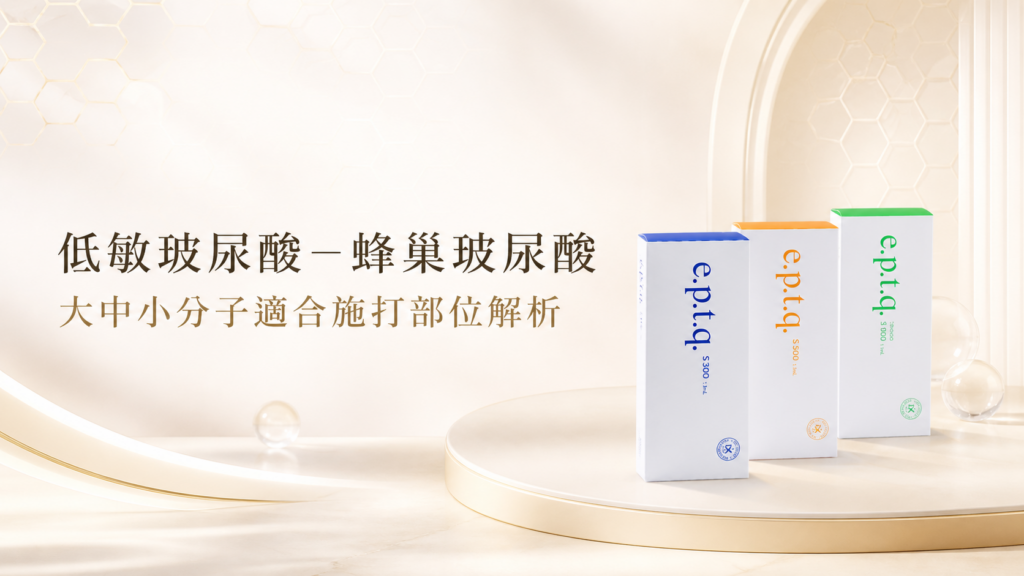
The short answer: EPTQ (E.P.T.Q) honeycomb hyaluronic acid is a gel-type filler made by a major Korean pharmaceutical company. "Honeycomb" is not an ingredient; it describes how the hyaluronic acid gel is structured. Its biggest advantages are a low allergy rate and a relatively affordable price. It has been approved in Taiwan for more than ten years, and comes in large, medium and small molecules for different areas.
EPTQ is the Korean filler we use most at my clinic. It is made by a major Korean pharmaceutical company, and its biggest advantages are a low allergy rate and a relatively affordable price.
EPTQ is made by a major Korean pharmaceutical company. The "honeycomb" in its name does not mean it contains anything from a honeycomb; it describes the structure of the hyaluronic acid gel. In Taiwan it currently comes in large, medium and small molecules, so different molecule sizes can be used for different areas. This article mainly explains the pros and cons of EPTQ.
EPTQ has been approved in Taiwan for more than ten years. This low-key filler rarely advertises or uses celebrity endorsements, so consumers may have heard of it less. Many dermatology clinics choose it as their affordable filler. EPTQ is marketed as low-allergy. I used to think that was just the manufacturer's claim, but after observing it, it really is not an exaggeration. I have now used more than a thousand syringes of EPTQ, and it truly has a much lower allergy rate than other Korean filler brands.
So far no patient has had an allergic reaction after EPTQ (many people get swelling or other allergic reactions after filler when their resistance drops with a cold), so in this article I mainly want to share this high-value product with you.
What Are the Features of EPTQ?
1. HIVE honeycomb gel structure with long-lasting results
EPTQ is a gel-type filler. The gel forms a more uniform structure with high support, and it can last up to a year.
2. Large, medium and small molecules for different areas
EPTQ comes in molecules from large to small, so you can choose a different molecule size for each tissue layer.
3. 2CM cross-linking technology with low allergy risk
EPTQ uses 2CM cross-linking technology, which adjusts the viscoelasticity of the hyaluronic acid gel through both physical and chemical cross-linking. This effectively reduces the amount of cross-linking agent used and lowers the chance of allergy.
4. Contains lidocaine
Every EPTQ molecule size contains anesthetic, so the injection is comfortable.
Which Areas Is EPTQ Suitable For?
Based on the product's characteristics and catalog recommendations, EPTQ can be used in the following areas after evaluation by a doctor:
Nasal base and columella
EPTQ is not suitable for the nasal base or columella, because it easily widens over time. The best solution for subtle nose enhancement is thread rhinoplasty.
Further reading: Pros and cons of thread rhinoplasty
Chin
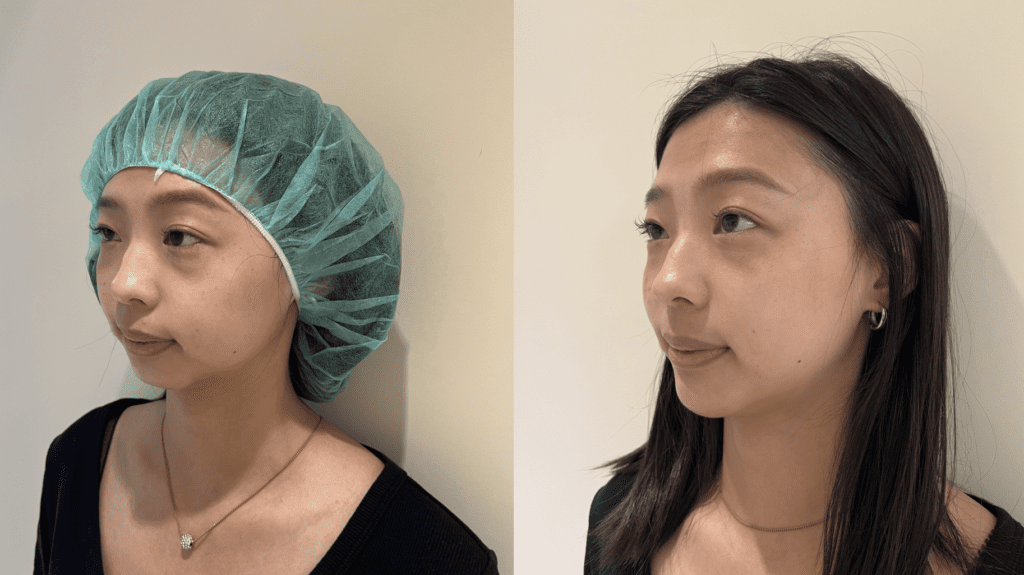
EPTQ can be used to improve a receding chin, insufficient chin length or an undefined chin contour. Adjusting the chin proportions appropriately can also make the front and side lines of the face look more harmonious.
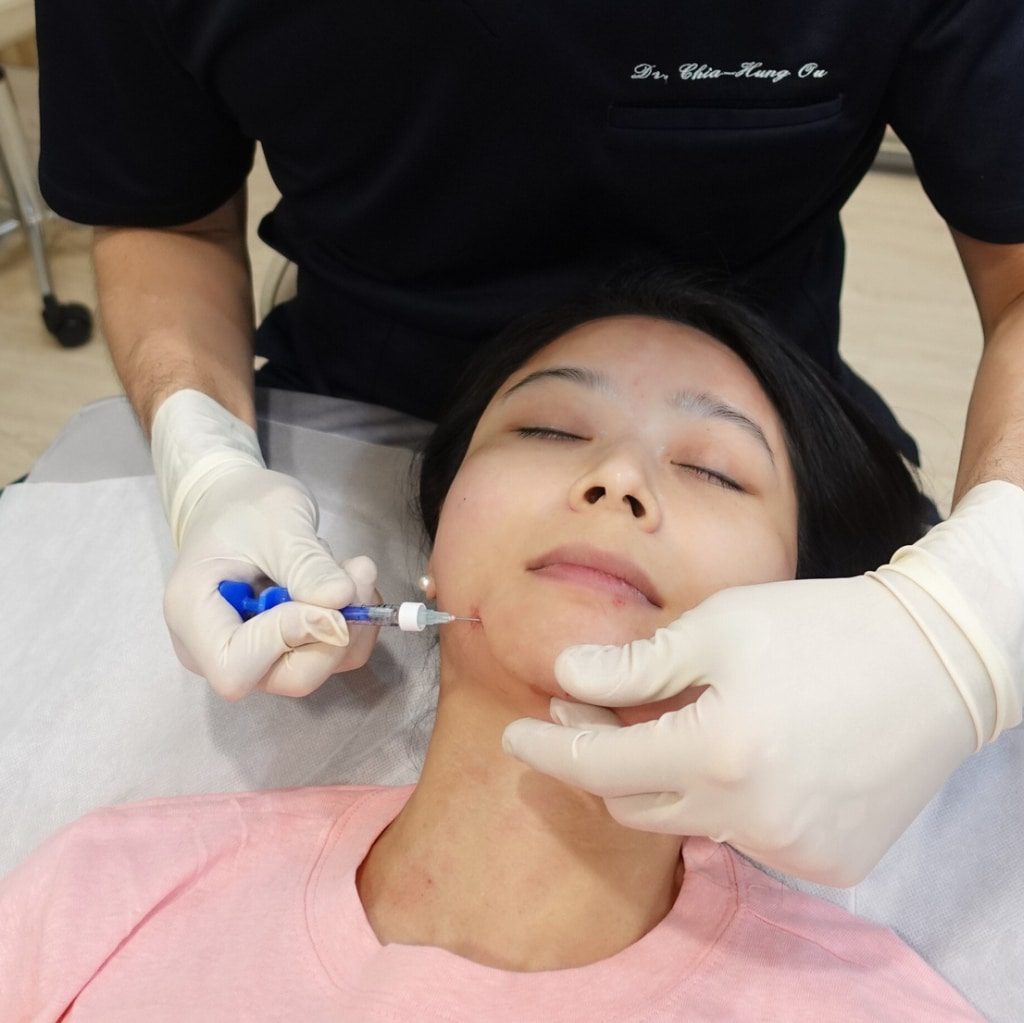
In the chin shown below, 1 cc of V50 filler was used to build the chin tip, and 2 cc of EPTQ was used to refine the jawline. This is the formula I currently consider the most perfect for the chin.
Further reading: Chin hyaluronic acid brand comparison
Apple cheeks / tear trough
I have tried every Korean filler, including LG and Neuramis. My wife's apple cheeks were done with Neuramis on one side and EPTQ on the other, and I had the nurse treated with LG. In my own observation EPTQ lasts up to a year, which is relatively long among these Korean brands.
Nasal base hollowness (nasolabial folds)
The large molecule of EPTQ (blue) can be injected into the hollow at the nasal base (the deep layer of the nasolabial fold), and the superficial lines can be refined with the small molecule (green) to soften the nasolabial folds.
Further reading: How to improve nasal base hollowness? 5 materials compared
Forehead
EPTQ is not suitable for the forehead because it is not firm enough. The forehead is not a good area for hyaluronic acid in general, since material that is not firm enough easily causes the memory-foam effect. The best materials for a hollow forehead are Ellanse or Radiesse.
Further reading: Pros and cons of Ellanse for the forehead
Hollow cheeks
The medium molecule of EPTQ (orange) is very suitable for hollow cheeks, and it has an immediate filling effect.
Lips
By my own preference, I do not like using EPTQ for lips. It is not very "pliable," which makes it harder to shape attractive lips. For lip filler I personally still recommend Juvederm or Restylane Defyne.
Further reading: Lip filler brand recommendations
How Long Does EPTQ Last?
The large EPTQ molecule can last more than a year, the medium molecule 8–12 months, and the small molecule 6–8 months.
How long hyaluronic acid lasts is closely tied to lifestyle and each person's metabolic rate. Whether a touch-up is needed depends on each person's situation.
What Reactions Can EPTQ Treatment Cause?
After hyaluronic acid injection, the treated area may temporarily show redness, swelling, pain, tenderness, bruising or unevenness. Most mild reactions gradually ease.
However, every injection treatment carries risk, and in rare cases complications such as infection, nodules, delayed inflammation, vascular occlusion or tissue damage can occur. If severe pain, abnormal skin color, vision changes or other rapidly worsening symptoms appear after treatment, contact your injecting doctor immediately and get a medical evaluation.
EPTQ Aftercare
After treatment, follow your doctor's instructions. Common principles include:
- Avoid pressing hard on or massaging the treated area for a short time.
- Avoid alcohol and activities that may increase swelling.
- Do not knead or try to adjust the shape yourself.
- If you notice unusual pain, skin color changes or visual symptoms, seek medical care immediately.
Different treated areas may have different care instructions. Follow the instructions given by your treating doctor.
EPTQ FAQ
Can EPTQ improve nasolabial folds?
EPTQ S500 is very close to Juvederm Voluma in firmness and resilience, and it is also a gel-type filler, so every area where Voluma can be used can also use EPTQ. The nasolabial folds, temples, apple cheeks and chin are all very suitable for EPTQ.
What are the disadvantages of EPTQ?
EPTQ's biggest drawback is that it is not as moldable as Juvederm or Restylane, so I do not recommend it for areas that need a lot of shaping, such as the lips.
About how much does EPTQ cost?
On the market EPTQ is priced at roughly NT$9,000–12,000 per 1 cc, about NT$1,000–2,000 more than Taiwanese-made filler. But for its longevity and low allergy rate, I think a Korean filler is definitely worth the extra NT$1,000–2,000.
All EPTQ used at Golden Apple Aesthetic Clinic is genuine, original-manufacturer product. Verify on the official certification site